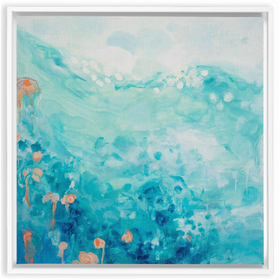
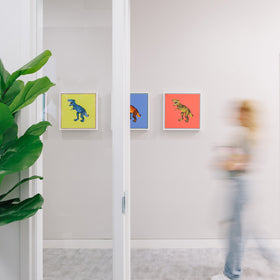
Written by Lauren Grace | Director, Curation & Creative Development | atp.art
This year, I had the privilege of serving as lead curator for six affordable housing communities throughout Ohio as part of a revitalization focused on preserving long-established neighborhoods. My role was to work with Related Affordable to develop art collections that reflected the identity of each community.
Although artwork is one of the final elements installed, the curation process begins much earlier. While architects, designers, and construction teams transform the physical spaces, I begin developing the artistic vision alongside them by researching each community, building a curatorial concept, commissioning artwork, and thoughtfully shaping collections that will ultimately become part of residents’ everyday lives.
By the time the buildings are ready for installation, every piece has been carefully selected to complement the renovated spaces while reflecting the identity of the people who call them home. My role was to ensure that when the final artwork was installed, the buildings didn’t simply look renewed but that they felt like home. Home is a feeling found in the thoughtful details that make people feel connected to a place, and the artwork on the walls becomes part of that experience. It quietly tells residents, “This space was created with care, and it was created with you in mind.”
A look behind the curation and installation of original artwork across six affordable housing communities in Dayton, Ohio, created in partnership with Related and shaped by local history, culture, and community input.
Each community had its own personality and history. Some primarily served families, while others were home to seniors who had spent decades in the neighborhood. As I began curating each collection, I followed the same approach I bring to every project by looking beyond the walls themselves to understand the people and experiences that shape a place.
That responsibility carried particular meaning for me because my own family has roots in Ohio. Throughout the project, I often found myself reflecting on what makes a place feel like home. I realized that artwork doesn’t create that feeling on its own. At its best, it reflects the memories, histories, and identities that already exist within a community.
Research Can Take You Far, But People Take You Further
Every collection begins with research. Before selecting a single piece, we study the neighborhood history, architecture, demographics, local culture, and defining characteristics of a place. Those details provide the foundation for thoughtful curation, but this project reminded me that research can only take you so far. The stories that shape a community most profoundly often can’t be found in our own efforts because they live in the daily experiences and conversations of the people who call a place home. One of those conversations took place while we were installing artwork at a property in Dayton, Ohio.
Before arriving on site at Asbury Apartments, our collaboration with the community had already led us to include a historical portrait from 1976 of the Ohio Players as a tribute to Dayton’s extensive funk music history. It was exactly the type of historically rooted piece we strive to include whenever possible. During the installation, however, property manager Latosha Gaines shared an unexpected fact… One of the members of the Ohio Players was her uncle. The historical portrait included simply as a celebration of Dayton’s music heritage suddenly became the centerpiece of recognizing her own family heritage.
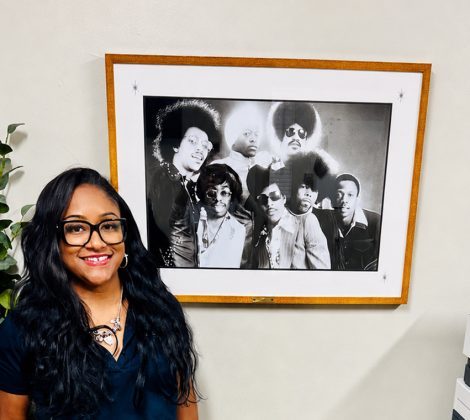
Asbury property manager Latosha Gaines with a 1976 portrait of the Ohio Players, which includes her uncle.
When History Becomes Personal
As Latosha shared her family’s story, I found myself standing alongside Mike Antonik from Related Affordable, listening as the significance of the collection came to life. We had originally planned for the Ohio Players portrait to hang in the community room, where it could celebrate Dayton’s remarkable musical legacy for everyone who entered. But as Latosha spoke about her family’s history, it became clear that the artwork represented something far more personal. Together, we made the decision to move the portrait into her office, where it would not only honor Dayton’s cultural history, but also serve as a daily reminder of her own family’s contribution to that legacy.
Our conversation didn’t end there.
Latosha went on to share that one of the custom ATP Studio pieces we had created also held special significance for the community because several residents had spent years as local DJs, including the site coordinator’s husband, Stan “The Man” Brooks. She explained that Stan is a lifelong musician, radio personality, mentor, and beloved figure throughout Dayton who has dedicated decades to bringing people together through music. Suddenly, that artwork took on a new meaning as well. It wasn’t simply inspired by the city’s musical heritage, it reflected people who continue carrying that heritage forward every day.
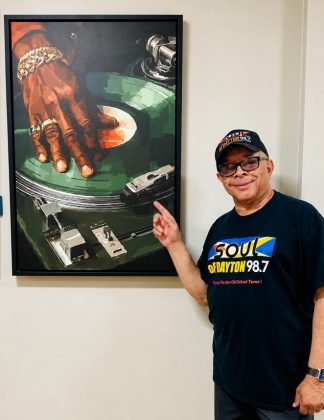
Stan “The Man” Brooks, a lifelong Dayton musician, acclaimed DJ, and on-air radio personality for 98.7 The Soul of Dayton, is pictured with a custom ATP Studio piece inspired by the city’s musical legacy.
At that moment, I realized nothing about the artwork itself had changed, but our understanding had. What began as a thoughtfully researched collection became something much richer because it was shaped by collaboration and a willingness to recognize that the deepest meaning often comes from the people who know a place best.
A New Approach to Community Curation
That experience changed the way I think about curation by providing firsthand experience of how the people who live in a place are its greatest historians. Our independent research provides an important foundation, but it can’t replace the memories carried by the people who call a community home. They remember the streets where children learned to ride bicycles. They remember the music that drifted through open windows during the summer. They remember buildings that no longer exist and neighbors whose influence continues long after they are gone. Most importantly, they know the stories that deserve to be remembered.
This experience ultimately inspired the development of ATP.art’s Community Art Preference Survey. Before curation begins, communities are now invited to share the stories that have shaped their community, along with the artists, landmarks, traditions, colors, subjects, and styles that feel most representative of home to them on a personal level. Rather than relying solely on our research, the survey allows us to learn directly from the people who know the community best so we can create a more intentional collection that is both meaningful and deeply rooted in place.
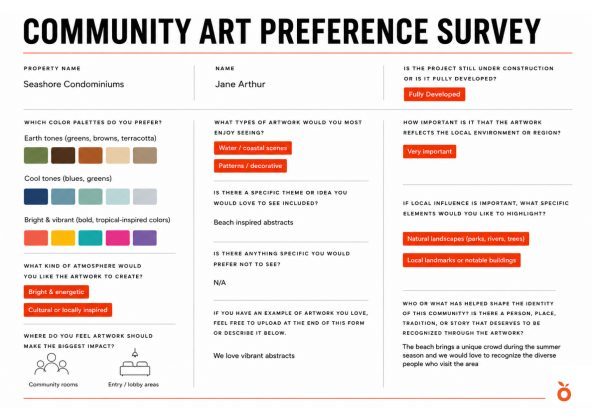
ATP.art’s Community Art Preference Survey helps gather local stories, visual preferences, and cultural references directly from the people who know a community best.
Creating Opportunities for Artists
That spirit of collaboration extended beyond the communities themselves. At Asbury, longtime Artrepreneur member artist Cedric Michael Cox contributed one of the featured works in the collection while also leading the installation across all six communities. Watching Cedric and his team installing not only his own artwork but the work of dozens of fellow artists was a fitting reminder that thoughtful curation is about more than placing art on walls. It’s also about creating opportunities for artists to contribute their talents in meaningful ways. Whether through exhibitions, original commissions, our Readymade giclée store, or installation work, each project becomes another opportunity to support sustainable creative careers. That commitment is at the heart of Artrepreneur’s mission, and as an artist myself, it’s one of the reasons I’m so proud to contribute to this work.
Finding Where It Belongs
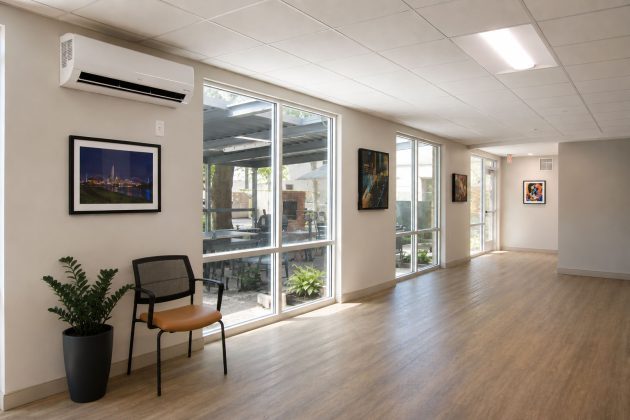
A completed view of the art collection at Asbury, where works inspired by Dayton’s local history and music bring character to the community’s shared spaces.
Looking back across these six Ohio communities, I am proud of every collection. Together, they represent six distinct identities shaped by local history and, most importantly, by the voices of the people who know those communities best.
Yet when I think back on this project, my first thoughts are not of the individual pieces of artwork. They are of the people behind them. I remember the conversations. I remember residents sharing memories. I remember artists carefully installing work they had poured themselves into creating. I remember our team working together toward a shared vision. Most of all, I remember watching a single piece of artwork find the place where it truly belonged.
Moving the Ohio Players portrait from a community room into an office may have looked like a minor installation decision to someone walking through the building. But for those of us standing there that day, listening as the community shared its history through personal stories, it became a reminder that meaningful art is created by considering the people who give a place its meaning. That meaning is not always obvious at first glance. A hand spinning a record may simply look like a recognition of Dayton’s music history. But to the residents who see themselves in it, and to people like Stan “The Man” Brooks, it represents who they are.
Our role as curators is not simply to choose what hangs on the walls. It is to uncover the stories that already exist, honor them with intention, and create space for every piece of art, every artist, every story, and every resident to find where it belongs.